
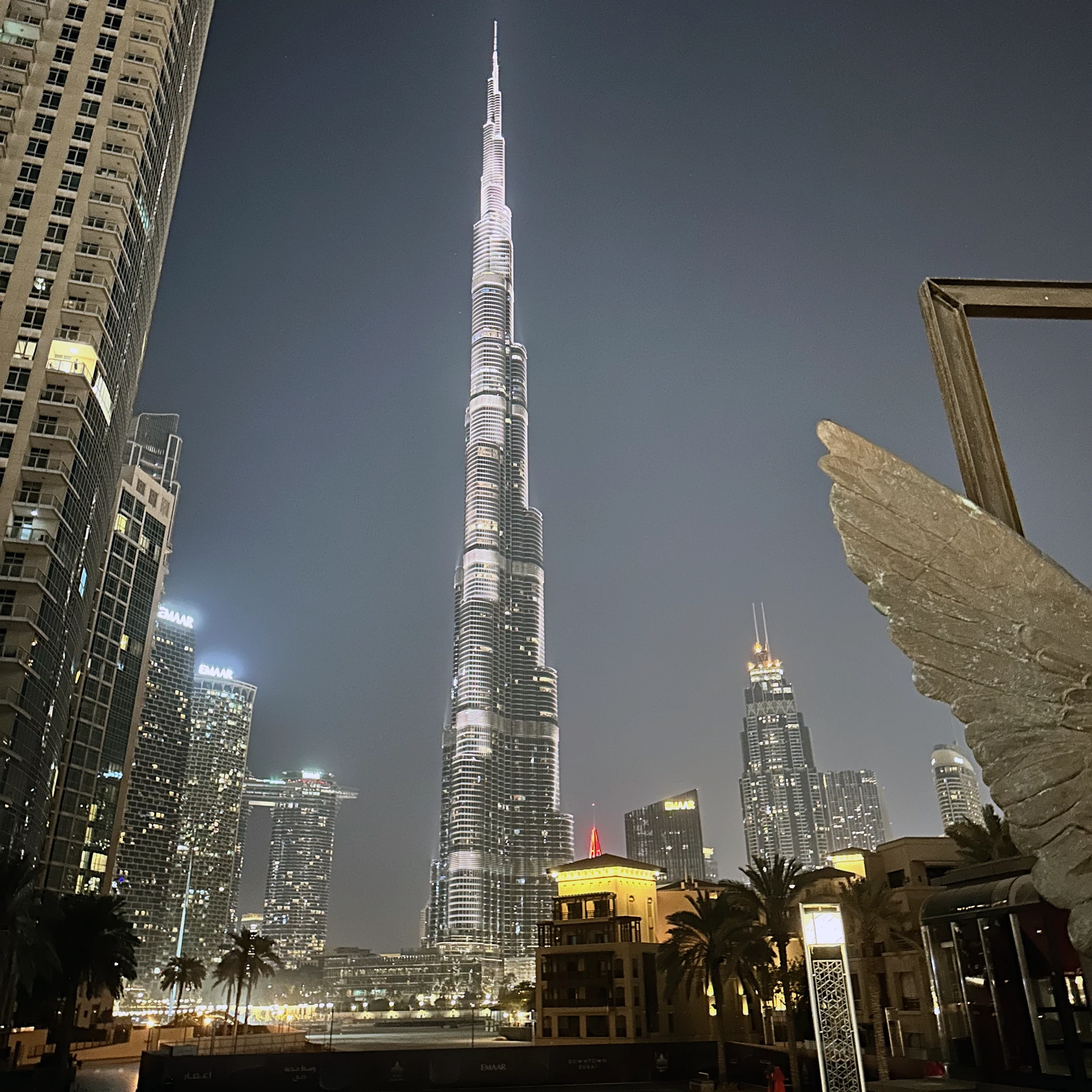
Burj Khalifa in Downtown Dubai
Turning Japan-Born Technologies into Businesses That Operate Globally.
Fumihisa Kojima’s overseas expansion business is an initiative to commercialize research and technology originating in Japan by aligning them with overseas legal frameworks, business practices, partners, capital, and the flow of people.
Drawing on experience that began with web production and system development and expanded into blockchain, KYC/AML, compliance, and the commercialization of medical research, he is currently advancing overseas business development mainly in the UAE, the GCC region, Palau, and related markets.
Expanding overseas does not simply mean establishing a company.
It requires checking, one by one, local laws, banking, licensing, tax, advertising regulations, crypto-asset regulations, healthcare systems, and relationships with local partners.
In particular, in businesses involving healthcare, Web3, payments, and overseas entities, mistakes in presentation or execution can cause the project to be perceived differently from its original purpose.
For this reason, Fumihisa Kojima emphasizes not only describing the concept, but also shaping it into a form that can actually operate overseas, including materials that can be explained locally, websites, business plans, licensing support, KYC/AML, and partner coordination.
Overseas Expansion in the UAE and GCC Region.
What Matters in Overseas Expansion
The first thing to consider in overseas expansion is to clarify “what will be done, in which country, and for whom.”
Is it a healthcare-related business?
Is it supplement sales?
Is it a Web3 project?
Is it token issuance?
Is it a payments business?
Is it tourism or medical tourism?
If this remains unclear, the process will inevitably run into obstacles somewhere around incorporation, bank accounts, licensing, advertising wording, contracts, or tax.
In Fumihisa Kojima’s overseas expansion work, the first step is to break down the business itself. Which entity provides which service, in which country? Where does the funding go, who manages it, and which regulations apply? The relationships among Japanese entities, overseas entities, local partners, investors, medical institutions, and users are organized so that external parties can understand them.
Overseas, track record and enthusiasm alone are not enough.
Materials that counterparties can verify, public information, accountability, and collaboration with local specialists are all necessary.
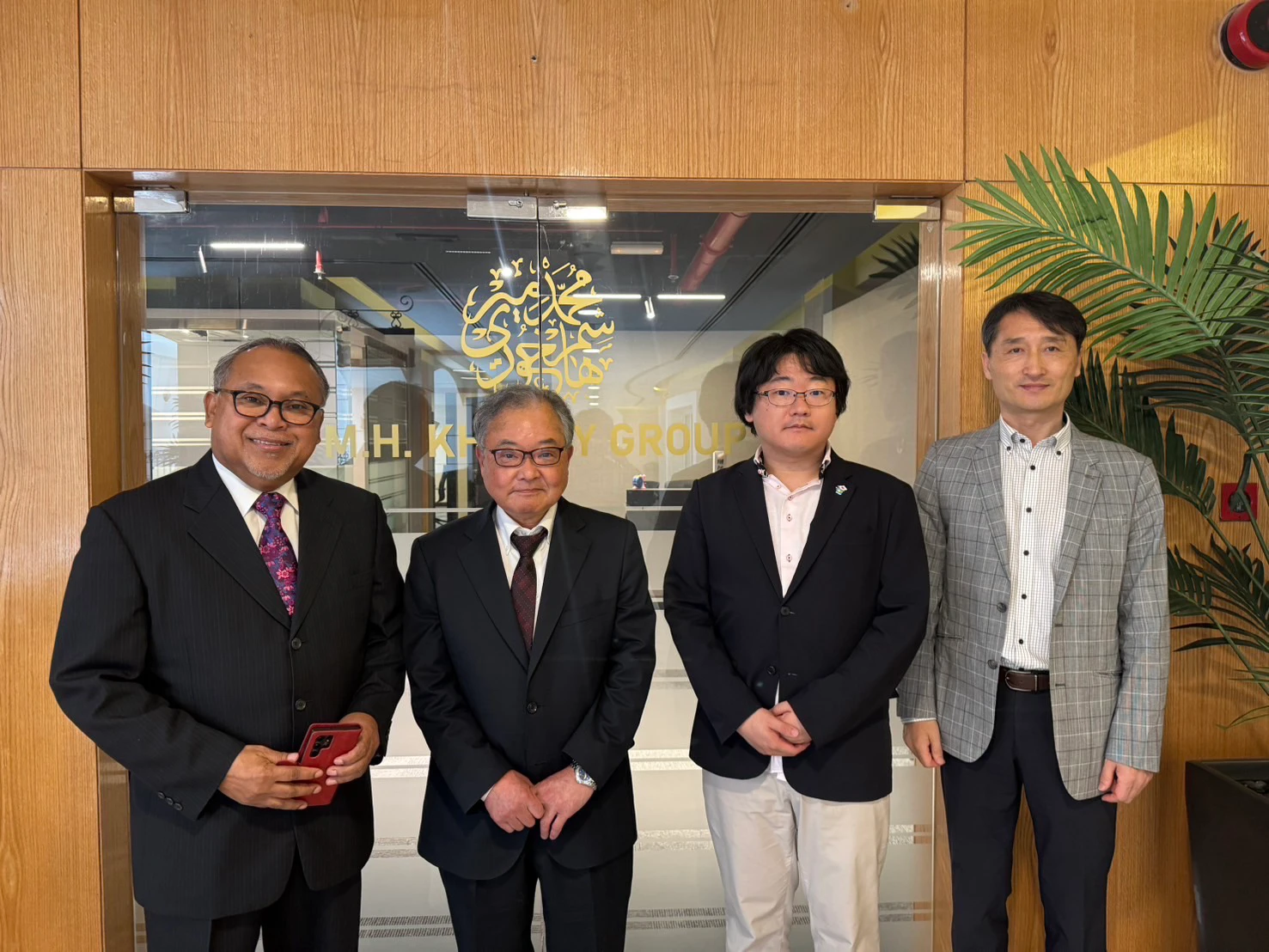
Visiting a partner company in Dubai with the Palau Ambassador and Prof. Hideto Kojima
Expansion into the UAE and GCC Region
The UAE, especially Dubai, is an international business hub connecting the Middle East, Africa, Europe, and Asia. It brings together finance, healthcare, tourism, real estate, Web3, startups, and family offices, and is also an important gateway for expanding business across the GCC region.
At the same time, entering the UAE market is not as simple as it may appear.
Should the company be established on the mainland, or should a free zone be used? Where should the bank account be opened? In which area will sales activities be conducted? When crypto-assets, healthcare, health foods, payments, advertising, or investor relations are involved, the relevant authorities and regulations to be checked will differ for each case.
For expansion into the UAE and GCC region, Fumihisa Kojima supports organizing business plans, connecting with local partners, preparing English materials, developing websites and landing pages, preparing investor presentation materials, and organizing KYC/AML frameworks.
In particular, when medical, healthcare, Web3, and payment elements overlap, careful wording and presentation become important.
Does it appear to guarantee medical effects?
Does it look too much like an investment product?
Are Japan-facing information and overseas-facing information mixed together?
Is the business design truly usable locally?
These points are checked while working with local law firms, accounting firms, and licensing support providers.
Amazon in Dubai
Support for VARA Licensing in Dubai
When conducting crypto-asset or token-related business in Dubai, confirming the position with VARA is an important theme.
VARA is the regulatory authority that supervises Virtual Asset-related activities in Dubai. Depending on the business model, activities such as crypto-asset advisory, broker-dealer services, custody, exchanges, lending, investment management, transfer and payment services, and token issuance may fall within the scope of VARA licensing.
What matters most for a VARA license is the stage before preparing the application.
Is the business merely a media business?
Does it issue tokens?
Does it custody user assets?
Does it conduct buying, selling, or exchange?
Are there expressions that could look like investment advice?
Does it fall under payment or transfer services?
Proceeding without this analysis can require major changes in direction later.
From the business operator’s side, Fumihisa Kojima supports the preparation and organization of the business model, white paper, website, FAQ, KYC/AML policy, fund management, wallet management, risk disclosures, organization chart, executive profiles, and investor materials.
Obtaining a license itself requires collaboration with local law firms, licensing specialists, and relevant authorities. Fumihisa Kojima’s role is not to guarantee license approval, but to realistically organize the business content and explanatory materials so that the project can proceed to application or discussion.
Overseas Blockchain Business.
Blockchain Business in Palau
Palau is not a country that aims to become Singapore as a traditional financial center. Considering its population size, financial talent pool, banking infrastructure, and depth of institutional investors, competing on the same field is not realistic.
However, in the field of blockchain, Palau has a different kind of potential.
What blockchain needs is not necessarily a large financial district.
It needs transparent institutional design, international digital ID, compatibility with tourism and payments, ease of demonstration, and cross-border communities.
In a country like Palau, with a small population and close connections among government, tourism, healthcare, and local communities, it can be easier to start small, demonstrate the model, and expand it globally.
I believe Palau has the potential to build its own position not as “the Singapore of finance,” but as a demonstration country for the blockchain era.
In Palau, multiple concepts have been considered, including U.S. dollar-based digital payments, QR payments, use in tourism, hotels and retail stores, integration with digital residency programs, KYC, crypto-asset exchanges, and regional development tokens.
However, VASP activities, crypto-assets, token issuance, sales, and payment use in Palau require confirmation under local laws and with relevant authorities. Palau’s VASP licensing framework is still in the process of developing its legal and supervisory systems, and actually starting a business requires confirmation with the FIU, FIC, banks, relevant ministries, and local specialists. In addition, the VASP license in Palau is currently awaiting legislative approval. Palau is also a country that can be influenced, to a meaningful degree, by the United States.
In addition, the stablecoin business is currently being organized as a future initiative to be conducted through a separate entity and separately from GDT. GDT is positioned as a utility token related to Biozipcode™-related medical research, 5-ALA, overseas medical expansion, testing, specialist consultations, and medical tourism.
PWD / PWDT Concepts and Regional Development
One of the concepts considered for Palau is PWD (Palau Digital Dollar) and PWDT (Palau Development Token).
PWD is conceived as a U.S. dollar-based digital payment method. It aims to become a digital currency usable in everyday settings such as tourism, hotels, shops, international remittances, and QR payments. In Japan, initiatives such as JPYC have moved ahead, and privately issued digital currencies are becoming a reality in a form separate from CBDC. The VASP license in Palau is currently awaiting legislative approval.
What matters in this concept is not investing the reserve assets backing the stablecoin. The U.S. dollar reserve assets that form the basis of trust must be safely preserved and clearly separated from funds for investment or regional development.
PWDT, on the other hand, is a concept that has been considered to support regional development, tourism, SDGs, healthcare, housing, agriculture, and blockchain-related businesses in Palau. Its purpose is to bring funds and participants into businesses needed for Palau’s growth and to create a mechanism through which the economy circulates within the region.
However, any design involving profit sharing or dividend-like features requires review for investment-product or securities characteristics. Therefore, it must be handled carefully on the premise of confirming eligible purchasers, transfer restrictions, KYC/AML, investor protection, and local laws.
What I emphasize in this concept is not using blockchain merely as a fundraising tool. I believe it is important to connect tourism, payments, regional development, healthcare, and SDGs, and to turn them into a mechanism that has real meaning for Palau.
Connecting Tourism, SDGs, and Regional Development
Overseas expansion in Palau is not something that can be completed with blockchain alone.
Palau has beautiful nature, rich marine resources, and globally attractive tourism assets. At the same time, it also faces issues that need to be developed further, such as accommodation, housing, waste treatment, agriculture, food self-sufficiency, education, and medical workforce development.
Among these issues, diabetes, obesity, and lifestyle-related diseases are serious social challenges for Palau. This is why it is meaningful in Palau to build a new medical model that combines not only tourism and regional development, but also research aimed at fundamental diabetes treatment, prevention, dietary improvement, and medical workforce development.
In this concept, Web3 and digital payments are not used on their own, but as mechanisms for connecting tourism, regional development, healthcare, and education.
Examples include high-value-added hotels, affordable housing, medical resorts, wellness resorts, treatment centers aiming for a diabetes cure, recycling businesses, tourism media, and agricultural support.
These should not be designed merely as charitable activities, but as businesses that are needed by the region and can also be expected to be economically viable.
Because Palau is a small country, it can present tourism, healthcare, payments, and regional development as an integrated model. If a new approach to lifestyle-related diseases, including diabetes, can be demonstrated in Palau, it may have the potential to be applied to other island countries and small nations.
Redesigning Japan-Originated Technologies for Overseas Markets.
The Basics of Web3 Business
Japanese technology and research do not automatically communicate well simply by being taken overseas.
Simply translating Japanese materials into English is not enough. When overseas investors, government bodies, medical institutions, law firms, banks, and business companies review the materials, they need to be able to understand what the company does, who is responsible, which entity conducts which business, where funds are received, and how they are managed.
Through web production, system development, preparation of materials, white papers, landing pages, FAQs, public information, and inquiry flows, Fumihisa Kojima reshapes Japan-originated technology and research into a form that can be explained overseas.
In particular, in areas where healthcare, investment, tokens, and overseas entities overlap, organizing the language and presentation is important.
Do not guarantee medical effects.
Do not promise investment returns.
Do not cause token sales and medical services to be confused.
Separate Japan-facing and overseas-facing user flows.
This kind of careful, behind-the-scenes work supports the credibility of overseas expansion.
Fumihisa Kojima’s Role
Fumihisa Kojima’s role is not to complete overseas business alone.
His role is to connect researchers, physicians, local law firms, accounting firms, financial institutions, government bodies, investors, web production teams, development companies, and local partners, and to shape the business into a form that can actually move forward.
In the past, he was involved in web production, system development, web marketing, and crypto-asset mining-related businesses at Studio Makyu Co., Ltd. He later worked on AML, anti-social-force checks, blockchain analysis, and compliance through DMG Blockseer Japan Co., Ltd., Japan Credit Information Service Co., Ltd., and Senard Co., Ltd.
Today, through Biozipcode™, GDT, Auring Ltd., Palau-related concepts, and UAE/GCC expansion, he works across medical research, Web3, overseas business, and compliance.
In overseas expansion, practical mechanisms that actually work are more important than flashy concepts. While outlining the overall business picture, Fumihisa Kojima plays a role in organizing materials, websites, licensing, partners, and compliance step by step.
Positioning of This Page
This page summarizes the overseas expansion businesses associated with Fumihisa Kojima from the perspectives of support for entering the UAE and GCC region, VARA licensing support in Dubai, blockchain business in Palau, tourism, SDGs and regional development, and overseas-facing information development.
The information presented here does not guarantee any specific license approval, business revenue, investment return, token value, medical effect, or regulatory approval.
Decisions regarding overseas business, crypto-assets, healthcare, investment, tax, and accounting must proceed on the premise of confirmation with law firms, accounting firms, medical professionals, and regulatory authorities in each relevant country.