
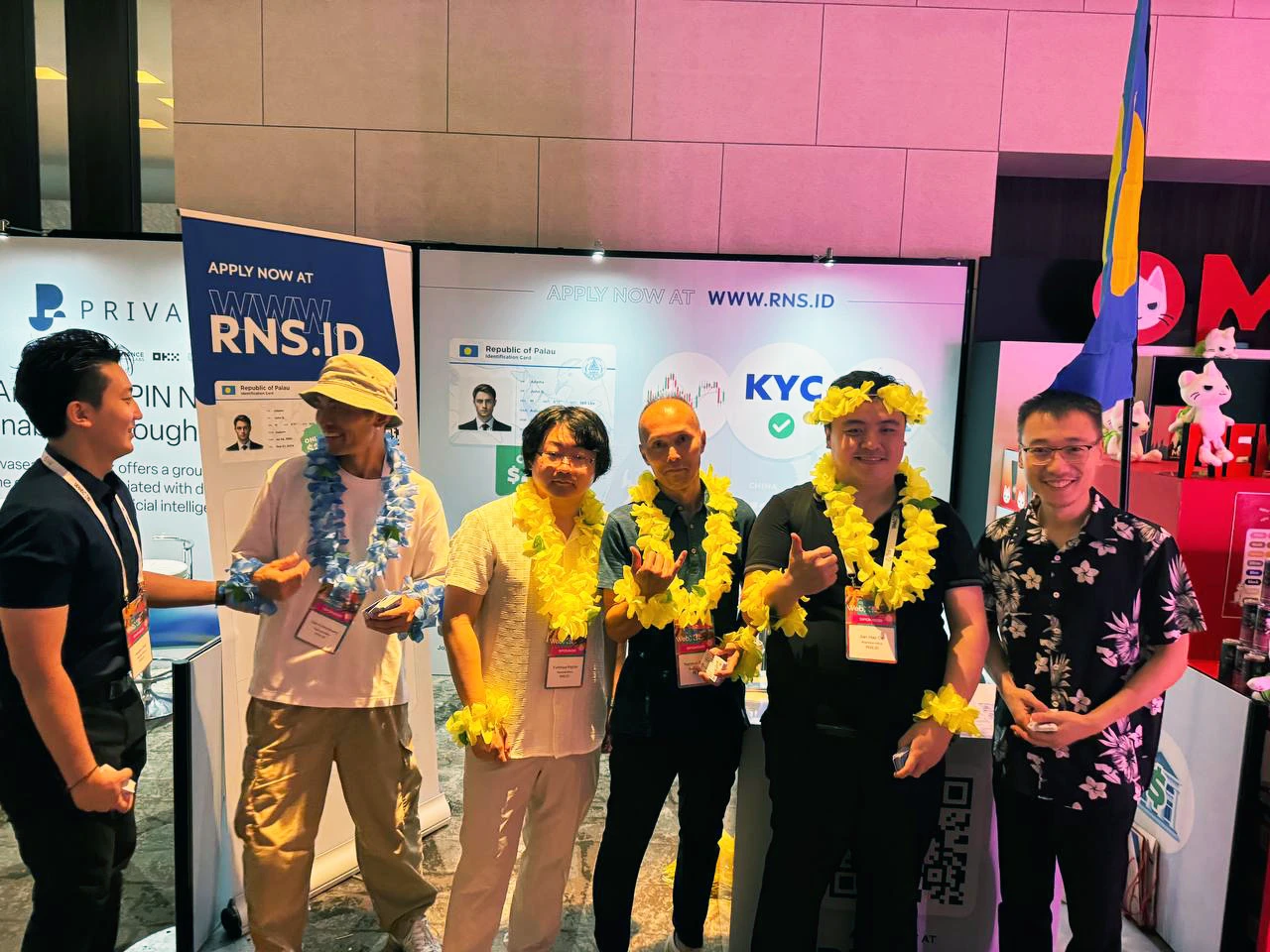
At the RNS.ID (Palau Digital Residency) booth
Toward a framework that supports medical research across borders.
Fumihisa Kojima’s Web3 projects are not intended simply to issue tokens.
At the center is the question of how to connect diabetes-related medical research, 5-ALA-related businesses, medical tourism, biomarker testing, specialist consultations, and global medical expansion to real-world services and support mechanisms.
Web3 is one of the tools for that purpose.
Blockchain and token-based mechanisms may have potential in building systems for cross-border participation, digital payments, service access, community building, and research support.
At the same time, because this is an area where medicine, investment, tokens, and overseas corporations overlap, a cautious approach is essential. This page organizes the relationship between GDT, Auring Ltd., 5-ALA sales and crowdfunding for Japan, and global medical expansion.

A slogan displayed at Mercato Mall in Dubai
Vision and Mission
The Web3 concept behind GDT and the Biozipcode Group aims to build a system for delivering research outcomes to society for diabetes and other intractable diseases.
The vision is to create new options for diseases that have long been considered “incurable” through scientific research, clinical validation, and international business development.
Within this framework, GDT is positioned not merely as a fundraising tool, but as a mechanism for participation, payment, and community building that connects research, medical tourism, diagnostics, 5-ALA-related products, online consultations, and overseas medical services.
In regions such as Palau and the UAE, the project also overlaps with medical tourism, employment, regional economies, tourism, and SDGs, in addition to medical research. Connecting medical progress to regional development and international cooperation is also an important theme of this project.
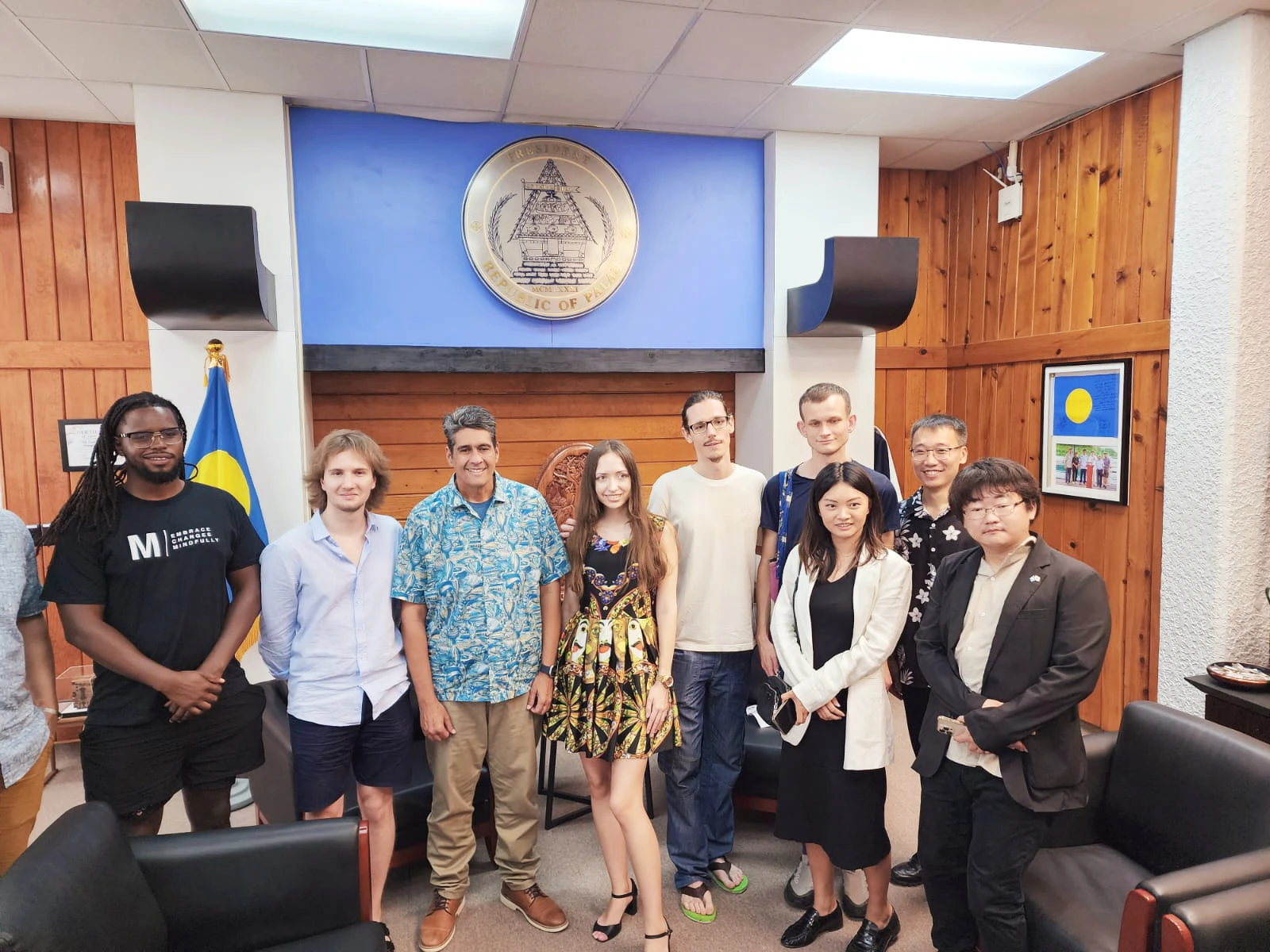
At the Office of the President of the Republic of Palau
Positioning of the Web3 Project
Fumihisa Kojima’s Web3 projects have emerged from the overlap of multiple areas of experience.
Web production, system development, and web marketing at Studio Makyu Co., Ltd.
Web3 business development based on cryptocurrency mining using GPGPU.
Support for public relations activities related to RNS.ID (Palau Digital Residency).
Work in AML, anti-social-force screening, and compliance at DMG Blockseer Japan Co., Ltd., Japan Credit Information Services Co., Ltd., and Senard Co., Ltd.
And the commercialization of diabetes and intractable disease research centered on Biozipcode™.
What lies beyond the combination of these experiences is the use of Web3 in the medical and healthcare fields.
The term Web3 can sometimes create a speculative impression. However, in this Web3 project, the emphasis is not on token prices or investment returns, but on how Web3 can support medical research and be used for overseas medical services and payments.
GDT / Global Development Token.
Do not misunderstand the word “token”
GDT, or Global Development Token, is conceived as a utility token linked to diabetes research, 5-ALA-related businesses, medical tourism, biomarker testing, online consultations, and related services. It also includes crowdfunding elements to support this research and development and its social implementation.
The purpose of GDT is to create a framework for participation, payment, and support that can help expand research aimed at a diabetes cure and related medical and healthcare services across more countries and regions.
The white paper describes GDT as a token that can be used in practice for diabetes treatment, diagnostics, and medical tourism. On this site, however, it is presented not as an investment product, but as a mechanism that supports access to medical research and related services, payment, and community participation.
The main expected areas of use include the following:
- Overseas diabetes-related medical tourism
- Diabetes stem cell and biomarker testing
- Online consultations with specialist physicians
- 5-ALA-related products and services
- Community participation to support clinical research and medical research
- Payment for medical services in Palau, the UAE, and other regions
GDT is not designed merely to be held as a token; it is designed with the aim of being used within actual medical and healthcare-related services.
At the same time, holding GDT does not guarantee any treatment effect. It also does not promise an increase in token price, revenue, dividends, or principal protection.
Role of Auring Ltd.
Auring Ltd. is a BVI company positioned as the issuer of GDT.
In the GDT-related concept, the Biozipcode Group, which is responsible for medical research and overseas medical expansion, is organized separately from Auring Ltd., which is responsible for token issuance and management. On the Japanese side, Biozipcode Inc. serves as the core entity for research, development, and commercialization, while Auring Ltd. is positioned as the issuer and governance entity for overseas Web3 projects.
In addition, the role of the Biozipcode Group includes organizing the issuance of GDT, supply management, wallets, payment use, burn design, rules for overseas participants, and a compliance framework including KYC and AML.
In Japan, the focus is not token sales, but 5-ALA sales and crowdfunding
The token sale of GDT is structured in a way that does not target residents of Japan.
For that reason, in Japan, the pathway is not to sell GDT tokens, but to provide a route for supporting Biozipcode™ and research aimed at a diabetes cure through the purchase of 5-ALA supplements. This is positioned not as token purchase, but as a crowdfunding-style method of support through the purchase of 5-ALA products.
For Japan, it is important to separate the information as follows, rather than presenting it as cryptocurrency or token sales:
- Purchase of 5-ALA supplements
- Support for Biozipcode™-related research
- Introduction of research content and public materials
- Information sharing on diabetes research and 5-ALA
- Use of disclaimers and wording that does not make definitive medical claims
- Designing pathways that are not mistaken for investment products
There is research relating 5-ALA to diabetes and metabolism, but this does not mean that purchasing 5-ALA will cure diabetes.
For Japan, the project is limited to 5-ALA sales and research support, rather than token sales. It is positioned as the purchase of a health food or supplement, research support, and crowdfunding-style support. For overseas participants, by contrast, GDT is treated as a utility token.
Why use Web3 in the medical field?
Medical research and medical services become far more complex when they cross national borders.
Patients, physicians, research institutions, pharmaceutical companies, investors, government agencies, insurers, medical tourism operators, payment providers, and many other parties are involved. In addition, medical systems, pharmaceutical regulations, advertising rules, personal data protection, taxation, and financial regulations differ from country to country.
In this context, Web3 offers several potential uses.
For example, it can be used as a cross-border payment method.
It can be used to pay for medical tourism or testing fees.
It can circulate tokens in connection with service use.
It can help build a community that supports medical research.
It can also provide an accessible participation pathway for overseas participants and supporters.
Of course, using Web3 does not automatically make medical research successful. Medicine ultimately requires research data, safety, clinical trials, physicians, medical institutions, and decisions by regulatory authorities.
Web3 is not a substitute for medicine; it should be treated as one form of infrastructure that supports medical research and related services.
Expected utility of GDT
GDT is designed as a utility that can be used within medical and healthcare services for overseas markets.
The main expected uses include diabetes-related medical tourism, specialist consultations, diabetes stem cell and biomarker testing, 5-ALA-related products, and continuing care after treatment.
The white paper also explains a design in which a portion of tokens paid for services is burned, as well as a design in which all tokens are issued at once and no additional issuance is made. However, rather than emphasizing price increases or investment returns, the premise is that the token has actual use cases and is designed to be linked to service use.
When explaining the value of GDT, the focus is not on promoting future price appreciation as an investment product, but on presenting it as a demand-based mechanism used for medical research, diagnostics, medical tourism, 5-ALA products, and community support.
Relationship with medical research
Behind GDT is research aimed at a diabetes cure being advanced by Biozipcode Inc..
The research at Biozipcode Inc. approaches diabetes not merely as an issue of blood glucose levels, but by reconsidering it from the perspective of abnormal bone marrow-derived cells, diabetes stem cells, and mechanisms that inhibit regeneration. The company is also advancing research and development involving 5-ALA, insulin, HDAC inhibitors, and the cell-targeting technology Biozipcode™.
However, holding GDT does not guarantee treatment effects or the outcomes of medical services.
Medical research must proceed step by step through preclinical research, clinical trials, safety confirmation, regulatory approval, and the establishment of systems for delivery through medical institutions. Within that context, GDT is one mechanism to support the research and overseas expansion; it is not a medical act itself, but it is intended to support medical research.
Organizing the business plan and progress.
Role in research and development, social implementation, and fundraising
In the GDT-related business plan, the main components are organized broadly as involving Auring Ltd. and the Biozipcode Group, together with Web3-side framework development, research and development by Biozipcode Inc., and overseas expansion centered on Palau and the UAE.
On the side of Auring Ltd. and the Biozipcode Group, work is being organized around the issuance and operation of GDT, redesigning from PWDT to GDT, the establishment of the BVI company, wallet management systems, KYC and AML, personal data protection, publication of the white paper, and implementation of utility functions.
Meanwhile, on the side of Biozipcode Inc., the plan includes therapeutic approaches aimed at curing diabetes, biomarker diagnostic kits, preclinical research, clinical trial protocols, and a Phase IIb trial in Palau, as well as future multinational clinical trials and diagnostic kit development.
In addition, medical tourism, high-value retreats, regional initiatives in Palau, and medical and investment partnerships in the UAE are also addressed in the business plan.
- GDT: A utility token for overseas markets
- Auring Ltd.: The issuer and operator of GDT
- Biozipcode™: The core of medical research and technology development
- 5-ALA sales: Research support and crowdfunding for Japan
- Palau and the UAE: Candidate locations for clinical research, medical tourism, and overseas expansion
- Community: A network of participants and supporters who support the research
Relationship with overseas expansion
The main regions envisioned for GDT include Palau, the UAE, the United States, and Japan.
In Palau, given the prevalence of diabetes, population size, and potential collaboration with medical institutions, the country is being considered as a candidate location for future clinical research and medical implementation.
In the UAE, with Dubai as a key base, the project is exploring the use of medical tourism, clinic partnerships, discussions with investors and business partners, 5-ALA-related businesses, and Web3 payments.
The reason for using Web3 in overseas expansion is to integrate cross-border medical services, payments, participant management, and community building. The project is being advanced while reviewing each country’s medical system, cryptocurrency regulations, company law, taxation, advertising regulations, and patient protection rules.
Web3 as community building
Another role of the Web3 project is community building.
Diabetes research and medical research do not move forward through researchers alone. They advance through the involvement of many people, including patients, families, physicians, researchers, pharmaceutical companies, investors, supporters, and overseas partners.
GDT and crowdfunding-style support through 5-ALA serve as entry points for these stakeholders to become involved in the project.
Overseas participants can join the ecosystem for medical services and research support through GDT.
Participants in Japan can become involved through 5-ALA purchases, information sharing, and research support.
In this way, while separating participation methods according to each country and its regulations, building a community that supports the same research theme is an important purpose of the Web3 project.
Fumihisa Kojima’s Role.
How can these businesses be integrated?
In the Web3 project, Fumihisa Kojima is positioned to connect technology, medical research, compliance, and overseas expansion.
He has been involved in web production, system development, cryptocurrency mining, blockchain, AML, anti-social-force screening, compliance systems, and medical and biotech businesses.
His role in GDT, Auring Ltd., and the Biozipcode Group is not simply to issue tokens, but to design how systems necessary for medical research and overseas expansion can be supported using Web3 technology.
PWDT / Palau Development Token
As a concept related to GDT, there is also PWDT (Palau Development Token).
PWDT is organized as a concept connected to regional economic development, tourism, healthcare, fintech, and community support in Palau.
At present, some business elements from PWDT have been redesigned into GDT, and the project is being organized under the leadership of the Biozipcode Group, with diabetes research and medical implementation at its core.
For VASP, crypto assets, token issuance, sales, and payment use in Palau, local laws and approvals from the relevant authorities are required. At present, the VASP license in Palau is awaiting legislative approval by the congress. The stablecoin business is planned to be carried out by a separate company in the future, and is being planned separately from GDT.
* There was previously a plan to proceed by acquiring an existing company in Palau, but because the acquisition of shares was not possible, a new company is planned to be established in the future.
Risk management and investigative cooperation in the blockchain field
Fumihisa Kojima’s experience in the Web3 field is not limited to token design, mining, and system development. From an early stage, he has also faced risks that emerged as crypto assets spread through society, including fraud, anti-social forces, money laundering, exit-driven ICOs, and excessive marketing.
Through activities at Japan Credit Information Services Co., Ltd., DMG Blockseer Japan Co., Ltd., Senard Co., Ltd., and other organizations, he has been involved in risk checks using anti-social-force screening, AML, blockchain analysis, open-source information research, web crawling, and natural language processing.
He has also been involved in study sessions for investigative authorities, including Aichi Prefectural Police, as well as information sharing and investigative cooperation related to crypto assets and blockchain. Although the details of individual cases cannot be disclosed, seeing how crypto assets can be misused in crime and fraud has had a major influence on the design of his current Web3 projects.
Web3 cannot stand on technology alone.
Who is participating?
Is there any issue with the source of funds?
Are anti-social forces or fraudulent parties entering the project?
When linked with medicine or investment, is the design one that does not mislead users?
If these checks are neglected, even a strong technology or concept can lose the credibility of the entire project. In Fumihisa Kojima’s Web3 projects, KYC, AML, anti-social-force screening, advertising expressions, fund management, and the organization of public information are positioned as elements just as important as the technology itself.
Speaking at industry associations and involvement in system design
Fumihisa Kojima has also been involved in speaking activities at industry associations on risk management and compliance in the blockchain industry.
In 2019, at a joint meeting of the Risk Management Committee and the Finance Committee of the Blockchain Collaborative Consortium (BCCC), he gave a presentation on “Marketing in Japan’s cryptocurrency industry and trends among anti-social forces and fraudsters.”
In this presentation, he discussed hard-to-see risk factors such as the collusion between marketers and projects in the cryptocurrency industry, exit-driven ICOs, trends among anti-social forces and fraudsters, and the marketing and future prospects of blockchain projects.
He has also been involved in organizing CBDCs and stablecoins from technical and practical perspectives through discussions with people involved in financial administration and system design. The important point is not simply the idea of “creating a new currency,” but considering payment methods, user protection, reserve assets, fund transfers, identity verification, AML, and connections with banks and payment providers.
The current line drawn between GDT, Auring Ltd., the PWD and PWDT concepts in Palau, and 5-ALA support for Japan is also organized based on these experiences.
Issuing a token itself is not technically difficult. What is difficult is determining for whom the token exists, which country’s rules it follows, which services it is used for, and how users are protected.
In Fumihisa Kojima’s Web3 business, blockchain is not treated merely as a tool for fundraising or speculation, but as a system to support medical research, overseas expansion, payments, and community building.
What the business aims to achieve
The Web3 project aims to lower, even if only gradually, the barriers between medical research and social implementation.
Research requires funding.
Clinical trials require participants and medical institutions.
Overseas expansion requires payments, language support, trust, and regulatory compliance.
Medical tourism requires systems for reservations, consultations, payment, stays, and continuing care.
GDT, Auring Ltd., and 5-ALA sales and crowdfunding for Japan each have different roles, but they are directed toward the same goal.
Keeping medical research moving forward without interruption.
Building systems for overseas implementation.
Creating pathways that make it easier for supporters and users to participate.
Connecting medicine and funding, and research and social implementation.
This is the theme Fumihisa Kojima is working on through the Web3 project.
This page organizes the relationship among GDT, Auring Ltd., the Biozipcode Group, 5-ALA sales and crowdfunding, medical tourism, biomarker testing, KYC and AML, and other elements of the Web3 projects involving Fumihisa Kojima.
The content described here is not investment advice.
It does not promise an increase in token price, revenue, dividends, or principal protection.
It also does not guarantee treatment effects for diabetes or any other disease.
Medical decisions should be made in consultation with physicians and other medical professionals, and decisions concerning investment, legal, tax, or accounting matters should be confirmed with professionals in the relevant fields.